Noord Plaas

Noord Plaas

noord = north  ·  plaas = farm

A small home for learning projects: courses, films and workbooks made with care and free to use. The first is a history of South Africa in all its voices that teaches young people to check the evidence for themselves.

from the lesson 3.1 film · trekboers, c. 1800

Why we made it

The course we couldn't find

We're a South African family living in Estonia. When our son reached high school, we looked for a South African history course that told the whole story, in all its voices, and taught him to check the evidence for himself. We couldn't find one.

So we started building it, with Claude, and we're sharing it free with every family and school who wants it.
  • The past is still argued over

    South Africans still disagree about their own history. A student who knows how to test a source can join that conversation honestly.

  • Teenagers already ask chatbots

    A chatbot can sound sure and still be wrong. Learning to check is now as basic as learning to read.

  • Habits outlast facts

    Dates fade. Fairness to people you disagree with, honesty with evidence and a love of the land stay.

Project one · a Noord Plaas course

South African History HS

The whole story of South Africa in all its voices, so a young person understands why people saw things so differently, and learns to find, test and weigh the evidence for themselves.

  • 8units, from the Cradle of Humankind to today
  • 111lessons, each with reading, a film, a workbook page and a "dig deeper" question
  • 1high-school credit, covering every South African topic in CAPS Grades 4 to 12, plus the gaps critics name
  • 0sign-ins. Free and open to any family or school

the eight units, one colour each from the land

  1. Deep Roots before 1488
  2. The Cape Colony 1488–1806
  3. Kingdoms and Treks 1806–1860
  4. Diamonds, Gold and War 1860–1910
  5. Segregation and Resistance 1910–1948
  6. Apartheid 1948–1960
  7. Repression and Uprising 1960–1990
  8. Building a Democracy 1990–today
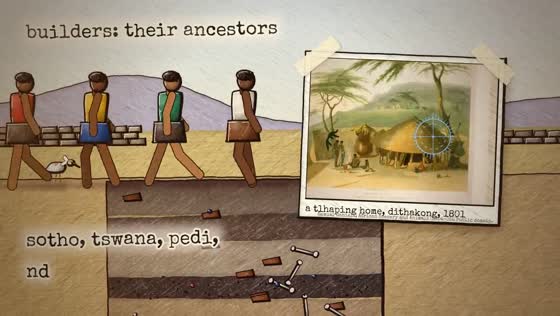
Film still: people walking past a dug trench, with a taped 1801 painting of a Tlhaping home
3.2 · daniell's dithakong, 1801
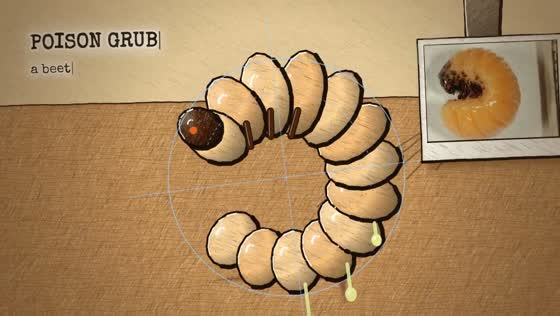
Film still: a drawn beetle grub circled by blue guide lines beside a taped photo
san film · poison grub
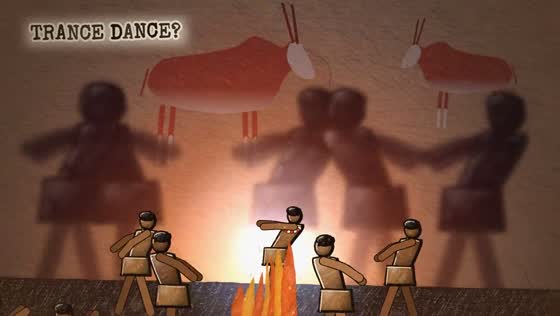
Film still: dancers by firelight with rock paintings behind them
san film · trance dance?
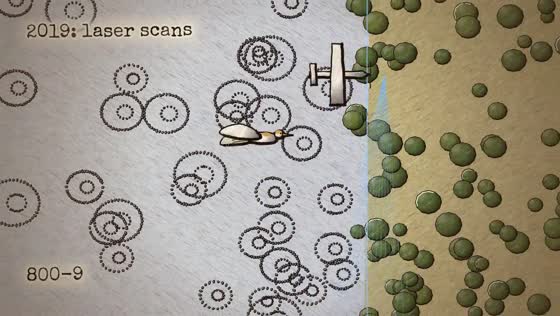
Film still: a laser-scan map of stone-walled town rings
3.2 · 2019 laser scans

Every side, every source

VOC records beside Khoekhoe and archaeological evidence, Voortrekker accounts beside Zulu testimony. Where historians disagree, the lesson says who says what.

Tools, not verdicts

Students learn to test a source, compare two accounts and write a balanced argument, so they can take part in the debate honestly.

Truthful, and lovely to use

Hard history told truthfully but not graphically, with real paintings and places, warm writing and hand-drawn films.

Look inside a lesson · 3.1 Southern Africa around 1800

Every lesson starts with a film

It's easier to watch than to read, and a short film pulls you into the story. Then you read, write it down in your own words, and dig deeper.

1watch · the first minute of the lesson 3.1 film, with sound
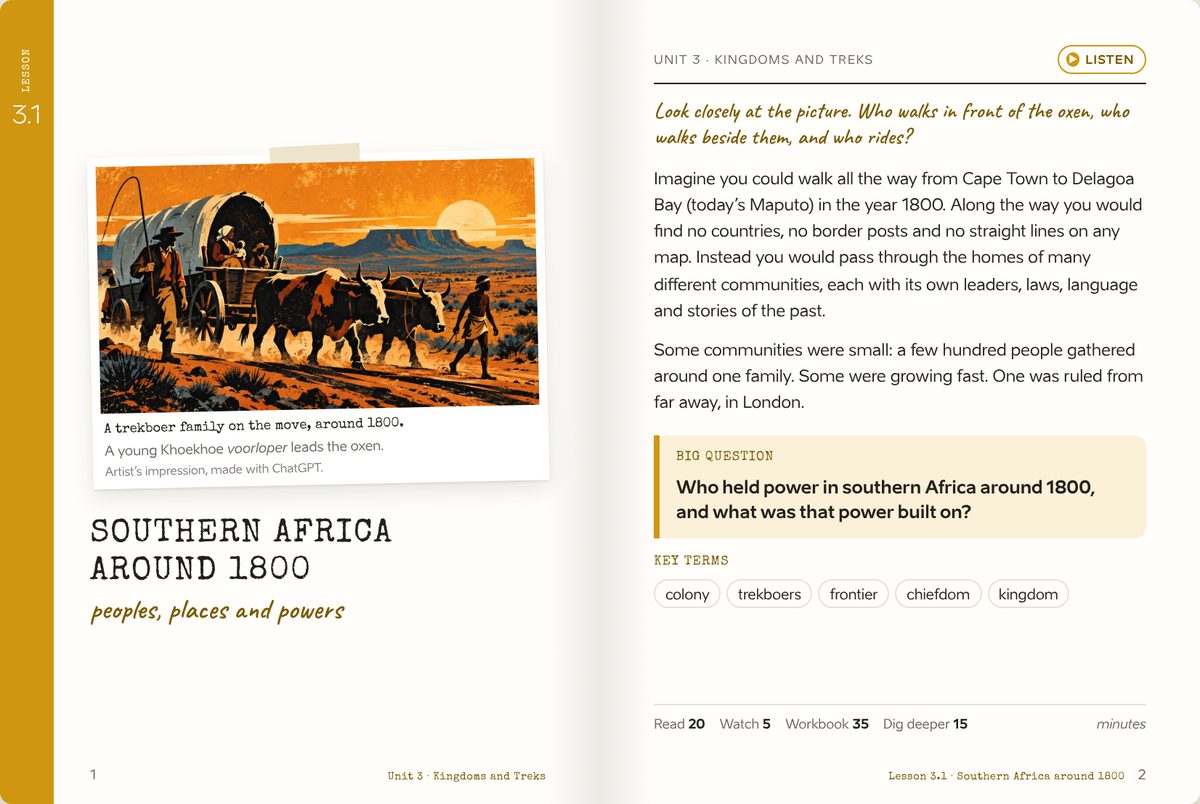
The lesson 3.1 reading as an open book: a picture of a trekboer family and the opening page with the big question

2Read

A short, warm reading on the course website, with real paintings, a big question and the key words.

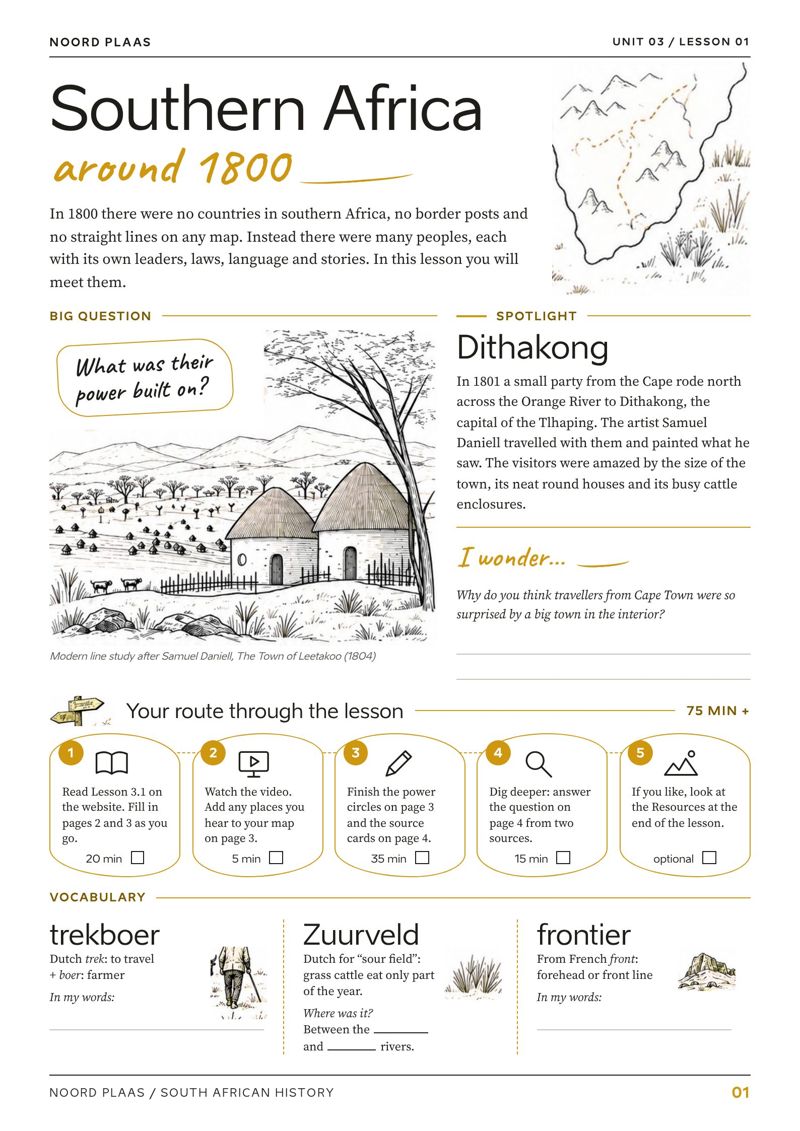
Workbook page 1 for lesson 3.1, with the big question, a spotlight on Dithakong and the route through the lesson

3Write

Workbook pages turn the reading into your own notes, maps and perspective tables.

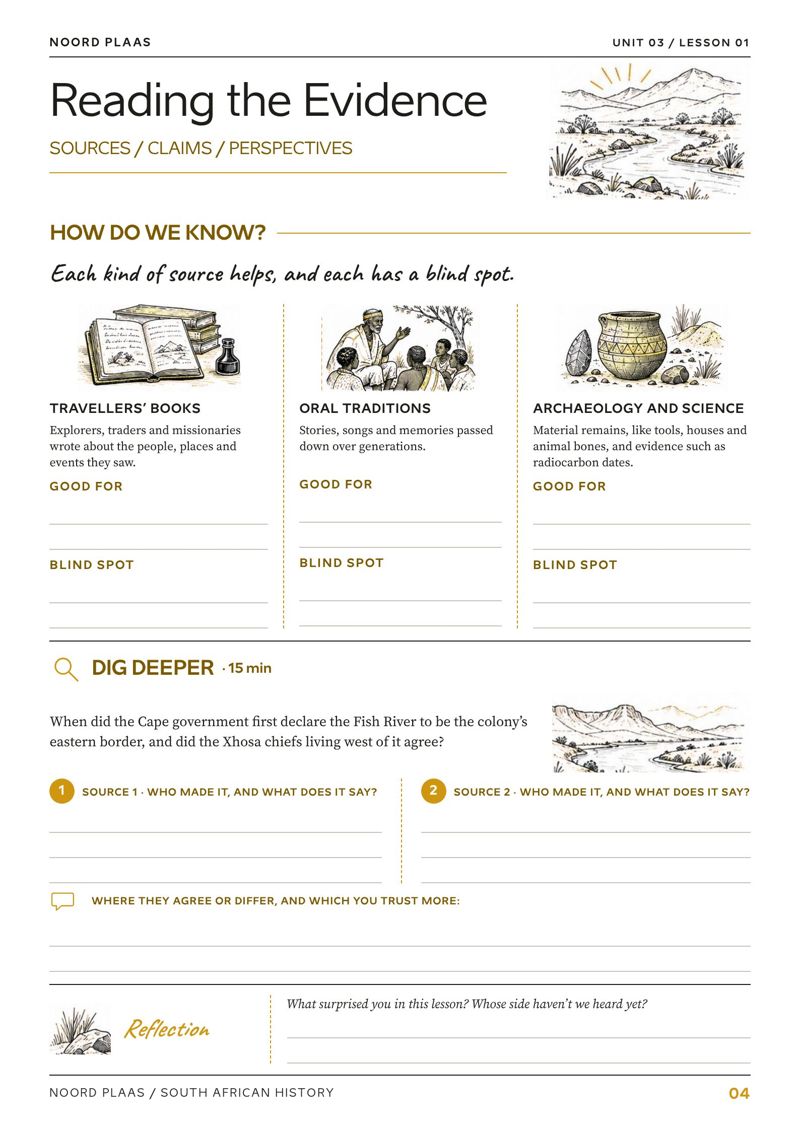
Workbook page 4 for lesson 3.1, Reading the Evidence, with the Dig deeper question and two source boxes

4Dig deeper

One real question, answered from two sources you find and check yourself.

Using AI well

AI that makes you think more, not less

Teenagers already ask chatbots about history, and a chatbot can sound sure and still be wrong. The course is built with Claude, and it teaches students to use AI the way a good researcher would: as a guide to the evidence, never a replacement for it.

  1. Find the source

    Use a chatbot or search to point you to a real source: a letter, a record, a dig report, a museum.

  2. Check it twice

    Find the same fact in two independent sources and cite both.

  3. Ask who and why

    Who made this source, when, and why? What does it show, and what does it leave out?

  4. Decide for yourself

    Weigh the evidence and write your own argument. Help fades over the year until you find and check your own sources.

the course's rule

Use a chatbot to find a source, never as one.

Built on Claude

How we use Claude, now and next

Today: Claude in every step

  • Research

    Reads the curriculum, its critics and paired archives from every side, and writes source notes.

  • Write

    Drafts lessons, workbook pages, tests and answer keys against our written ethos and design rules.

  • Draw

    Writes the code that draws each film frame by frame, in coloured pencil on paper.

  • Check

    Every page is checked: whose voices are here, whose are missing, and is every claim backed by a named source?

next · on the Claude API

Tools for students

  • The Dig deeper helper

    A student asks a question about the past. Claude helps them find sources from more than one side, check one against another and weigh the evidence, then asks what they conclude and why. It never hands them the answer.

  • A second reader for your argument

    Students write a short argument from evidence. Claude asks questions about it: which source backs this, who would disagree, what's missing? It doesn't grade or rewrite.

  • Our course pipeline on the API

    Drafting, checking and laying out a whole unit in one run, so we can finish all eight units and start the next course.

how we're designing the student tools

No sign-ins

Students don't make accounts, and we don't keep what they type.

Sources, not verdicts

Every answer points to real sources a student can open and check.

Free stays free

Spending limits and small, fast models where they're enough keep costs low.

People in the loop

Claude drafts; we read, edit and choose what goes into the course.

Who we are

A South African family in Estonia

founder · course and content

Camille

A South African mom who writes, designs and checks every lesson, workbook page and film with Claude.

co-founder · technology

Ryan

Runs the servers and security, and keeps a close eye on costs so the course can stay free.

On the shelf

What's next at Noord Plaas

in the making · unit 3 under way

South African History HS

South African history for high school. Unit 3 lessons are written; films and workbooks are coming out lesson by lesson.

next

A new project

More courses and films in the same spirit will live here.

later

And another

Every project under one roof, at noordplaas.com.